


What is the working principle of the 722.8 Filter?
As a reliable supplier of the 722.8 Filter, I'm excited to share with you in-depth knowledge about its working principle. Understanding how this filter operates is crucial for both end - users and those in the industry looking to make informed procurement decisions.
1. Basic Overview of the 722.8 Filter
The 722.8 Filter is a highly specialized component designed for specific industrial and mechanical applications. It plays a vital role in maintaining the purity and functionality of various systems by removing unwanted particles and contaminants. The filter is engineered with precision to meet strict quality and performance standards, ensuring long - term and reliable operation.
2. Physical Structure
The 722.8 Filter consists of multiple layers of filtering media. These media are carefully selected based on their ability to trap different sizes of particles. The outer layer acts as a pre - filter, which captures larger debris and contaminants. This initial filtration step helps to protect the inner, more delicate filtering layers from excessive wear and clogging.
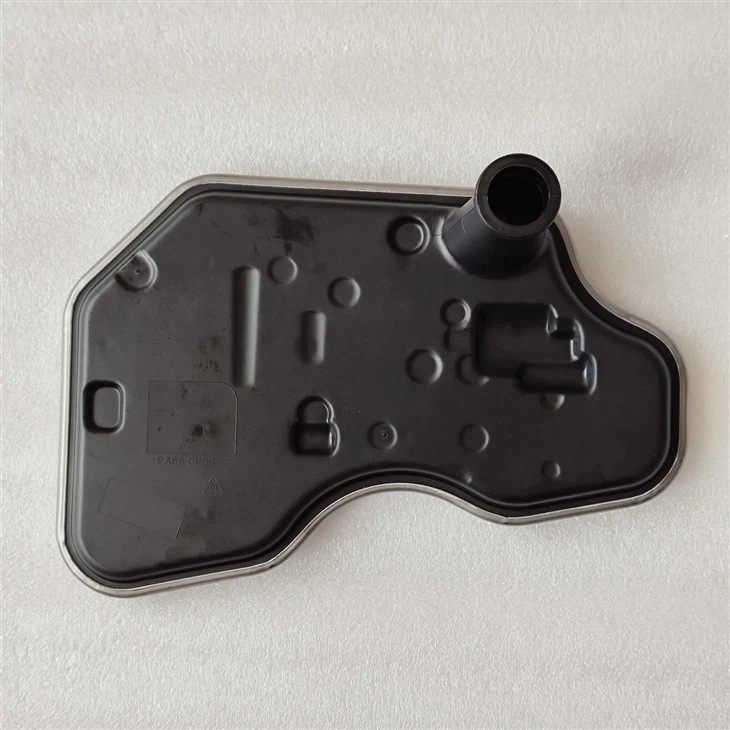

Underneath the outer layer, there are several intermediate layers. These layers are designed to target smaller particles, ranging from fine dust to microscopic contaminants. The structure of these layers is optimized to provide a large surface area for filtration, allowing for efficient and thorough particle removal.
The innermost layer is the final line of defense. It is designed to capture the smallest particles and ensure that the fluid or gas passing through the filter meets the required purity standards. The entire filter housing is constructed from high - quality materials that are resistant to corrosion, pressure, and temperature variations, ensuring the integrity of the filtration process under different operating conditions.
3. Filtration Mechanisms
3.1 Mechanical Filtration
Mechanical filtration is the most basic and fundamental mechanism of the 722.8 Filter. When the fluid or gas enters the filter, the physical structure of the filtering media acts as a barrier. Larger particles are simply too big to pass through the pores of the media and are thus trapped on the surface or within the pores. This is similar to how a sieve works, where larger objects are retained while smaller ones pass through.
The efficiency of mechanical filtration depends on the size of the pores in the filtering media. The 722.8 Filter is designed with a carefully calibrated pore size distribution to ensure that it can effectively capture particles of different sizes. As the fluid or gas continues to flow through the filter, more and more particles are removed, gradually increasing the purity of the medium.
3.2 Adsorption
In addition to mechanical filtration, the 722.8 Filter also utilizes adsorption to remove contaminants. Some of the filtering media are treated with special substances that have a high affinity for certain types of contaminants. For example, activated carbon can be used in the filter to adsorb organic compounds, odors, and some dissolved substances.
Adsorption occurs when the contaminants adhere to the surface of the adsorbent material. The large surface area of the adsorbent provides numerous sites for the contaminants to attach to. This process is highly effective in removing substances that cannot be easily removed by mechanical filtration alone, such as dissolved chemicals and volatile organic compounds.
3.3 Electrostatic Filtration
Electrostatic filtration is another important mechanism employed by the 722.8 Filter. Some of the filtering media are given an electrostatic charge. As the particles pass through the filter, they are attracted to the charged media due to electrostatic forces. This is particularly effective for capturing very small particles, such as those in the sub - micron range, which may otherwise be difficult to remove by mechanical means.
The electrostatic charge on the media helps to increase the filtration efficiency by attracting and holding particles that would otherwise be carried through the filter by the fluid or gas flow. This mechanism enhances the overall performance of the filter, especially in applications where high - purity filtration is required.
4. Flow Dynamics
The flow of fluid or gas through the 722.8 Filter is carefully designed to optimize the filtration process. The filter is engineered to ensure a uniform flow distribution across the entire filtering media. This prevents uneven loading of the media, which could lead to premature clogging in some areas and reduced filtration efficiency in others.
The inlet and outlet ports of the filter are designed to minimize pressure drop. A high pressure drop can reduce the flow rate of the fluid or gas and may also cause damage to the filter or other components in the system. By carefully designing the flow path and the shape of the ports, the 722.8 Filter maintains a low pressure drop while still achieving high - efficiency filtration.
5. Applications and Complementary Filters
The 722.8 Filter is used in a wide range of applications, including automotive, industrial machinery, and hydraulic systems. In automotive applications, it can be used to filter engine oil, transmission fluid, or coolant. In industrial machinery, it helps to keep the lubricants and hydraulic fluids clean, ensuring smooth operation and extending the lifespan of the equipment.
For those looking for complementary filters, we also offer a variety of options. For example, the Outer Filter 7DCT300 One Trans Uses 2pcs is a great addition to certain transmission systems. The SR8AT - 0002 - AM SR8AT Inner Filter Early Generation With Pillar 8AT032600007 708040 168942 is suitable for specific early - generation transmissions. And the 0DD - 0027 - AM Inner Filter Big With Magnet 0DD 325 429 A 0DD Transmission is designed for transmissions that require a larger filter with magnetic particle capture capabilities.
6. Maintenance and Long - Term Performance
To ensure the long - term performance of the 722.8 Filter, regular maintenance is essential. This includes monitoring the pressure drop across the filter. An increasing pressure drop is often an indication that the filter is becoming clogged and needs to be replaced.
The frequency of filter replacement depends on the operating conditions of the system. In high - contamination environments, the filter may need to be replaced more frequently. However, with proper maintenance and monitoring, the 722.8 Filter can provide reliable filtration for an extended period, reducing downtime and maintenance costs.
7. Conclusion and Procurement
In conclusion, the 722.8 Filter is a sophisticated and highly effective filtration solution. Its combination of physical structure, multiple filtration mechanisms, and optimized flow dynamics makes it a top choice for various applications. Whether you are in the automotive industry, industrial manufacturing, or any other field that requires high - quality filtration, the 722.8 Filter can meet your needs.
If you are interested in learning more about the 722.8 Filter or would like to discuss your specific filtration requirements, we encourage you to contact us for procurement and further technical discussions. Our team of experts is ready to assist you in finding the best filtration solutions for your systems.
References
- "Filtration Technology Handbook" by Andrew S. F. Harvey
- "Industrial Filtration for Process Engineers" by Heinz G. Frankenfeld


