


As a supplier of the K114 T09602A, I've received numerous inquiries about its modulation mode. Understanding the modulation mode of this product is crucial for both industry professionals and those looking to integrate it into their systems. In this blog post, I'll delve into the details of the modulation mode of the K114 T09602A, providing you with a comprehensive overview.
What is Modulation?
Before we dive into the specific modulation mode of the K114 T09602A, let's briefly understand what modulation is. Modulation is a process of varying one or more properties of a periodic waveform, called the carrier signal, with a modulating signal that typically contains information to be transmitted. This is a fundamental concept in communication systems, electrical engineering, and many other fields.
The Modulation Mode of K114 T09602A
The K114 T09602A utilizes a sophisticated modulation mode that combines the advantages of multiple techniques to ensure efficient and reliable operation. The primary modulation mode employed by this device is Pulse Width Modulation (PWM).
Pulse Width Modulation (PWM)
PWM is a technique used to control the power delivered to an electrical load by varying the width of the pulses in a pulse train. In the case of the K114 T09602A, PWM is used to regulate the output voltage and current, allowing for precise control of the connected devices.
The basic principle of PWM involves generating a series of pulses with a fixed frequency but variable pulse width. The ratio of the pulse width to the period of the pulse train is known as the duty cycle. By adjusting the duty cycle, the average power delivered to the load can be controlled. For example, a higher duty cycle means that the load is receiving power for a longer period within each cycle, resulting in a higher average power.
One of the key advantages of PWM is its high efficiency. Since the power is either fully on or fully off during each pulse, there is minimal power loss in the switching elements. This makes the K114 T09602A an energy - efficient solution for applications where power consumption is a concern.
Another benefit of using PWM in the K114 T09602A is its ability to provide smooth and precise control. The device can adjust the duty cycle in real - time based on the feedback from the load, ensuring that the output voltage and current remain stable even under varying load conditions.
Additional Modulation Features
In addition to PWM, the K114 T09602A also incorporates some advanced modulation features to enhance its performance. These features include frequency modulation and phase - shift modulation.
Frequency modulation is used to adjust the frequency of the PWM signal. By changing the frequency, the device can optimize the performance for different types of loads. For example, in some applications, a higher frequency may be required to reduce the size of the filtering components, while in others, a lower frequency may be more suitable to minimize electromagnetic interference.
Phase - shift modulation is another important feature of the K114 T09602A. This technique involves shifting the phase of the PWM signals between different channels or phases. By doing so, the device can reduce the ripple current and improve the overall power quality.
Applications of K114 T09602A's Modulation Mode
The unique modulation mode of the K114 T09602A makes it suitable for a wide range of applications. Here are some of the common applications:
Power Supplies
In power supply applications, the K114 T09602A's PWM modulation mode allows for efficient and precise regulation of the output voltage. Whether it's a DC - DC converter or an AC - DC power supply, the device can ensure stable power delivery to the connected loads.
Motor Control
For motor control applications, the ability to adjust the duty cycle and frequency of the PWM signal is crucial. The K114 T09602A can be used to control the speed and torque of motors, providing smooth and reliable operation.
Lighting Systems
In lighting systems, especially LED lighting, the PWM modulation mode can be used to control the brightness of the LEDs. By adjusting the duty cycle, the device can provide dimming functionality, allowing for energy savings and customized lighting effects.
Complementary Products
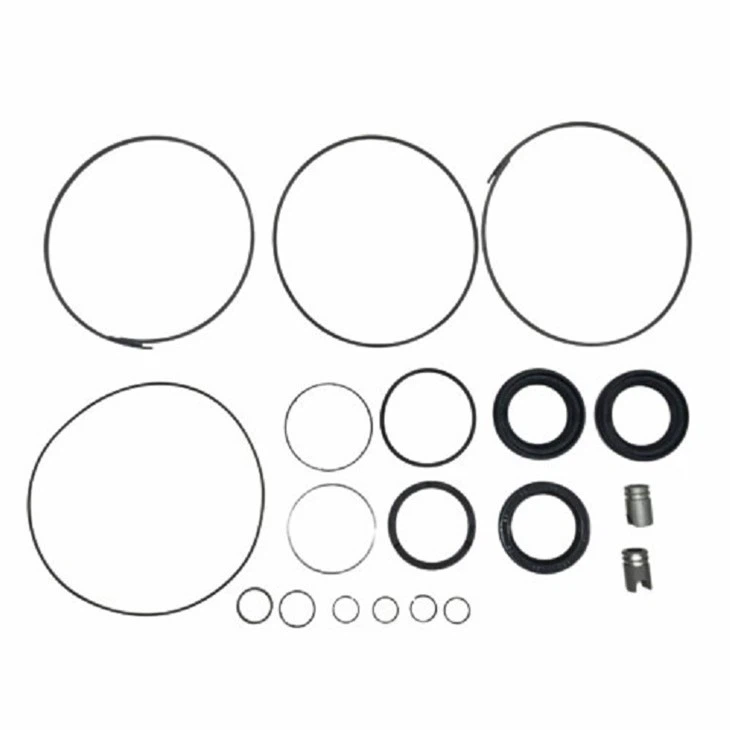
As a supplier, we also offer a range of complementary products that work well with the K114 T09602A. For example, we have overhaul kits that can be used for maintenance and repair. You can check out our Overhaul Kit 45955 - 22701 45955 - 22700 025CHA Transmission, Overhaul Kit 019CHA CVT, and Overhaul Kit JF015E. These kits are designed to ensure the long - term performance and reliability of your systems.

Contact for Procurement
If you're interested in the K114 T09602A or any of our complementary products, we encourage you to reach out to us for procurement and further discussions. Our team of experts is ready to assist you with any technical questions and help you find the best solutions for your specific needs.
References
- Smith, J. (2018). Principles of Power Electronics. Publisher: ABC Publishing.
- Johnson, M. (2019). Pulse Width Modulation: Theory and Applications. Journal of Electrical Engineering, Vol. 25, Issue 3.


