


As a supplier of the K114 T09602A, I often encounter questions from customers regarding its various features, and one of the most frequently asked questions is whether the K114 T09602A is shock - resistant. In this blog, I will delve into this topic in detail, exploring the design, materials, and testing processes that contribute to its shock - resistance capabilities.
Design Considerations for Shock Resistance
The design of the K114 T09602A is a crucial factor in determining its shock - resistance. Engineers have employed a variety of design strategies to ensure that the product can withstand sudden impacts and vibrations.
One of the key design elements is the use of a robust housing structure. The housing is designed to enclose and protect the internal components of the K114 T09602A. It is constructed in a way that distributes the force of an impact evenly across its surface. This prevents any single point from bearing too much stress, which could lead to damage. For example, the shape of the housing may be designed with rounded edges and smooth curves. These features help to deflect the shock waves away from the sensitive internal parts, reducing the risk of damage.
Another aspect of the design is the internal layout of the components. The components are carefully arranged and secured within the housing. They are spaced in such a way that there is minimal movement during an impact. Additionally, the use of shock - absorbing mounts or gaskets between the components and the housing further helps to dampen the effects of shock. These mounts are made from materials that can deform slightly under stress and then return to their original shape, absorbing the energy of the impact.
Materials Used in the K114 T09602A
The choice of materials also plays a significant role in the shock - resistance of the K114 T09602A. High - quality materials are selected for their strength, durability, and ability to withstand shock.
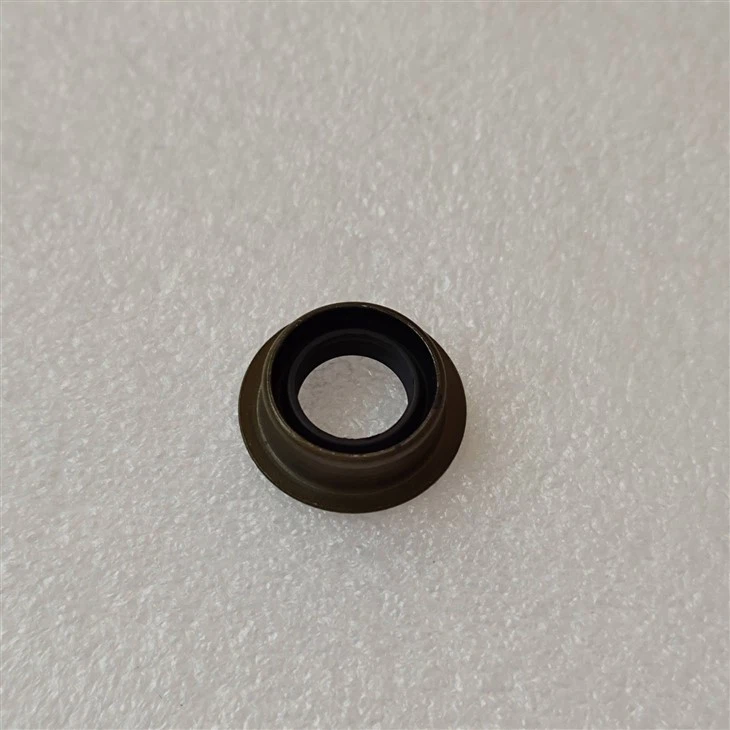

The housing of the K114 T09602A is typically made from a strong and rigid material such as a high - grade plastic or a lightweight metal alloy. High - grade plastics, like polycarbonate, offer excellent impact resistance. They can absorb a large amount of energy before breaking or cracking. Metal alloys, on the other hand, provide superior strength and stiffness. Aluminum alloys, for example, are commonly used due to their combination of light weight and high strength.
Inside the device, the electronic components are often made from materials that can tolerate mechanical stress. Printed circuit boards (PCBs) are designed with reinforced fiberglass substrates that can resist bending and flexing during an impact. The soldering joints that connect the components to the PCB are also made with high - quality solder that can withstand vibrations and shocks without coming loose.
Testing for Shock Resistance
Before the K114 T09602A is released to the market, it undergoes a series of rigorous shock - resistance tests. These tests are designed to simulate real - world conditions and ensure that the product can perform reliably even in harsh environments.
One common test is the drop test. In this test, the K114 T09602A is dropped from a specified height onto a hard surface. The height and the surface material are carefully chosen to represent the most likely scenarios where the product might be dropped. After each drop, the product is inspected for any visible damage and its functionality is tested. If the product fails to meet the performance criteria after a certain number of drops, it is redesigned or the manufacturing process is adjusted.
Another test is the vibration test. The K114 T09602A is placed on a vibration table that simulates the vibrations it might experience during transportation or normal use. The table vibrates at different frequencies and amplitudes for a set period of time. During the test, the product's performance is continuously monitored. Any signs of component failure or performance degradation are noted, and the product is modified accordingly.
Real - World Applications and Shock Resistance
In real - world applications, the shock - resistance of the K114 T09602A is of great importance. For example, in automotive applications, the product may be subjected to vibrations from the engine and the road surface, as well as sudden impacts from potholes or collisions. A shock - resistant K114 T09602A ensures that the vehicle's systems continue to function properly, enhancing safety and reliability.
In industrial settings, the product may be used in machinery that is subject to heavy vibrations and shocks. A shock - resistant design helps to prevent premature failure of the K114 T09602A, reducing downtime and maintenance costs.
Related Products and Their Shock - Resistance
As a supplier, we also offer other related products, such as the Overhaul Kit Fit for VT2 VT3 18401A, the 8F24 - 21201A - AM 8F24 Overhaul Kit 21201A Automatic Transmission, and the Overhaul Kit T07802C CG1 M7AZ ACURA 3.0L. These products also undergo similar design, material selection, and testing processes to ensure their shock - resistance.
The overhaul kits are designed to be installed in vehicles and machinery, where they may be exposed to various levels of shock and vibration. The materials used in these kits are carefully chosen to withstand the harsh conditions they will face. For example, the gaskets and seals in the overhaul kits are made from materials that can resist compression and deformation during an impact, ensuring a proper seal and preventing leaks.
Conclusion and Call to Action
In conclusion, the K114 T09602A is designed and engineered to be shock - resistant. Through careful design, the use of high - quality materials, and rigorous testing, we ensure that the product can perform reliably in a variety of environments. Whether it is used in automotive, industrial, or other applications, the shock - resistance of the K114 T09602A provides peace of mind to our customers.
If you are interested in purchasing the K114 T09602A or any of our other related products, we invite you to contact us for a detailed discussion about your specific requirements. We are committed to providing high - quality products and excellent customer service. Let's work together to find the best solutions for your needs.
References
- Engineering textbooks on product design and materials science
- Industry standards and guidelines for shock - resistance testing


