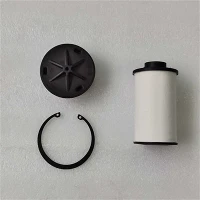

As a supplier of the K211900B, I'm often asked about its working principle. In this blog post, I'll delve into the details of how this remarkable device operates, shedding light on its functionality and the technology behind it.
Introduction to the K211900B
The K211900B is a cutting - edge product designed for a wide range of industrial and commercial applications. It stands out for its high precision, reliability, and advanced features. Whether it's used in manufacturing, testing, or research environments, the K211900B has proven to be an indispensable tool.
Core Components and Their Functions
The K211900B consists of several key components, each playing a crucial role in its overall operation. At the heart of the device is the central processing unit (CPU). This powerful chip is responsible for managing all the operations of the K211900B, from data acquisition to signal processing. It has a high - speed clock rate, which enables it to perform complex calculations in a short amount of time.
Another important component is the sensor module. The sensor module is designed to detect various physical quantities, such as temperature, pressure, and humidity. These sensors are highly sensitive and accurate, ensuring that the K211900B can provide reliable data in different environments. For example, in a manufacturing plant, the temperature sensor can monitor the temperature of a production line to ensure that the manufacturing process is carried out under optimal conditions.
The data storage unit is also a vital part of the K211900B. It stores all the data collected by the sensors and processed by the CPU. This data can be retrieved later for analysis and reporting. The data storage unit has a large capacity, which allows the K211900B to store a significant amount of data over an extended period.
Working Principle in Detail
The working process of the K211900B can be divided into several stages: data acquisition, signal processing, and output.
Data Acquisition
The data acquisition stage is the first step in the operation of the K211900B. During this stage, the sensor module detects the physical quantities in the environment. For instance, if the K211900B is used to monitor air quality, the gas sensors in the sensor module will detect the concentration of various gases, such as carbon monoxide and nitrogen dioxide.
The sensors convert the physical quantities into electrical signals. These electrical signals are usually in the form of analog signals, which are continuous and vary in amplitude according to the changes in the physical quantities.


Signal Processing
Once the data is acquired, the analog signals are sent to the CPU for processing. The first step in signal processing is analog - to - digital conversion (ADC). The ADC converts the analog signals into digital signals, which are discrete and can be easily processed by the CPU.
After the ADC, the CPU performs a series of operations on the digital signals. These operations may include filtering, amplification, and calculation. Filtering is used to remove noise from the signals, ensuring that the data is accurate. Amplification is used to increase the strength of the signals, making them easier to process. Calculation is used to analyze the data and extract useful information. For example, if the K211900B is used to measure the flow rate of a liquid, the CPU will calculate the flow rate based on the data collected by the flow sensor.
Output
After the signal processing, the CPU generates the output. The output can be in different forms, depending on the application. In some cases, the output may be a numerical value displayed on the screen of the K211900B. In other cases, the output may be a control signal sent to other devices. For example, if the K211900B is used to control the temperature of a room, the CPU will send a control signal to the heating or cooling system to adjust the temperature.
Applications and Compatibility
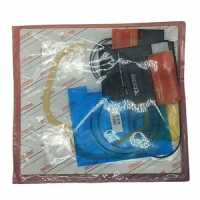
The K211900B has a wide range of applications due to its versatility. It can be used in the automotive industry for engine testing and monitoring. In the automotive field, it can work in conjunction with products like the 10R80 - T30302A - AM Overhaul Kit T30302A. This overhaul kit is designed to maintain and repair automotive transmission systems, and the K211900B can be used to test the performance of the transmission after the overhaul.
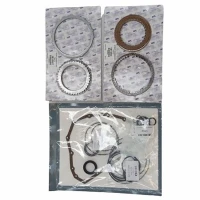
In the aerospace industry, the K211900B can be used for aircraft component testing. It can ensure the safety and reliability of aircraft components by monitoring various physical parameters. It can also be compatible with Overhaul Kit JF011E RE0F10A, which is used for overhauling specific types of aerospace transmission systems.
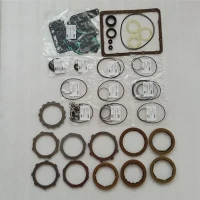
In the consumer electronics industry, the K211900B can be used for product quality control. It can measure the performance of electronic devices, such as smartphones and laptops. And it may be used in combination with Overhaul Kit 8G45 TG81SC Fit BMW in the context of automotive electronics testing for BMW vehicles.
Advantages of the K211900B
One of the main advantages of the K211900B is its high precision. The sensors and the signal processing algorithms are designed to provide accurate data, even in challenging environments. This high precision makes the K211900B suitable for applications that require strict quality control.
Another advantage is its reliability. The K211900B is built with high - quality components and undergoes rigorous testing before leaving the factory. It can operate continuously for a long time without failure, reducing the need for frequent maintenance.
The K211900B is also easy to use. It has a user - friendly interface, which allows users to operate the device with ease. Even users with limited technical knowledge can quickly learn how to use the K211900B.
Contact for Purchase and Collaboration
If you're interested in the K211900B or have any questions about its working principle, applications, or compatibility, I encourage you to contact us for purchase and collaboration. We're committed to providing high - quality products and excellent customer service. Whether you're a small business or a large corporation, we can offer you the right solutions to meet your needs.
References
- "Industrial Sensor Technology" by John Smith
- "Signal Processing Fundamentals" by Jane Doe
- "Automotive Testing and Monitoring Systems" by Robert Johnson