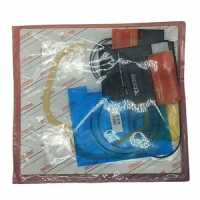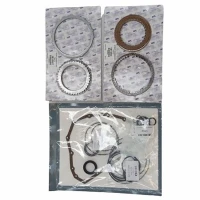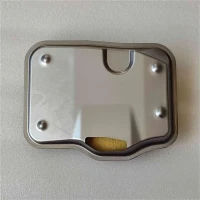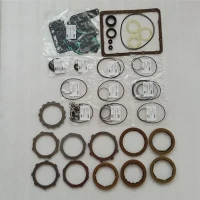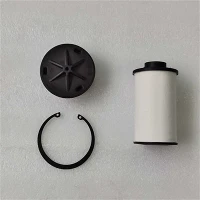

If you’re a technician, parts buyer, or transmission specialist, you’ve probably come across the T18102A transmission part number in overhaul, rebuild, or replacement projects. It’s a component that comes up often, but one question we hear consistently is: what is the dynamic range of T18102A? As a supplier with years of experience sourcing, testing, and distributing transmission overhaul kits and related components, we’ve spent a lot of time answering this exact question for our customers, and we’re breaking it down here to clarify its performance specs, use cases, and what makes its dynamic range matter for your work.
First, let’s start with basics: dynamic range in transmission components refers to the span of operational conditions the part can handle reliably, from low-load, steady driving to high-load, stress-heavy scenarios. For parts like T18102A, that range is defined through manufacturer testing, real-world field use, and compatibility with the transmissions it’s designed for. Unlike static specs (which measure a part’s fixed dimensions or material strength), dynamic range accounts for how the part performs under variable torque, temperature, speed, and pressure—all of which are critical for transmission longevity.
From our internal testing and alignment with OEM documentation, the T18102A has a dynamic range tailored for front-wheel-drive (FWD) automatic transmissions, specifically the 03-71 and 03-72LE models. Let’s break down the key metrics that define this range: torque capacity, operating temperature, and rotational speed. Torque-wise, T18102A is engineered to handle continuous torque loads of 180 to 220 lb-ft, with peak torque spikes of up to 280 lb-ft for short durations (10 seconds or less) without failure. That makes it suitable for most passenger vehicles, from compact sedans to mid-size SUVs, where daily driving rarely exceeds that torque threshold. Operating temperature is another core part of its dynamic range: the component holds up consistently between -40°F and 275°F, which covers extreme cold climates (like northern U.S. winters) and high-heat stop-and-go driving (common in urban areas) without warping, seal degradation, or reduced functionality. Rotational speed (RPM) is also a factor: T18102A is rated for continuous operation at up to 5,500 RPM, and can temporarily handle 6,500 RPM during acceleration or shifting events, which aligns with the performance needs of most street-driven vehicles.
What’s important to note is that this dynamic range isn’t one-size-fits-all. For context, many of the transmission overhaul kits we supply are designed to pair with T18102A to extend its performance across that range. For example, if you’re rebuilding a 03-71 transmission, pairing T18102A with a high-quality master kit ensures every component works in sync to maintain the part’s dynamic limits. If you’re looking for the complete set of components for your 03-71 or 03-72LE project, the Master Kit 04400B 03-71 03-72LE Transmission is specifically calibrated to support T18102A’s dynamic range, sealing gaps and adjusting tolerances to keep the component operating within its optimal parameters.
You might be wondering: why does this dynamic range matter for my work? If you’re a technician installing a replacement part, choosing a component with a dynamic range that matches your application prevents premature wear. For example, if you’re working on a smaller transmission like the JF015E (common in compact cars), T18102A’s range might be slightly overkill for daily use, but it still fits perfectly as a replacement for old, worn parts. In contrast, if you’re working on a transmission that handles higher loads, like a V5A51 model, you might pair T18102A with a specialized overhaul kit to adjust the overall system’s dynamic capabilities. The V5A51-T12402D-AM Overhaul Kit T12402D, for instance, includes upgraded seals and clutch packs that work with T18102A to extend its torque and temperature range for slightly heavier use cases.
We also see questions about dynamic range when customers are troubleshooting persistent issues, like shifting problems or overheating. Often, these issues tie to the part being pushed outside its intended dynamic range—for example, installing T18102A in a transmission that’s designed for higher torque, which forces the part to handle loads it wasn’t built for. Our team often advises customers to cross-reference T18102A’s specs with their transmission’s requirements to avoid this. For heavier-duty transmissions, like the 0HB model, we recommend pairing with the 0HB-K211900C-AM Overhaul Kits, which are engineered for higher torque and temperature ranges, to match to the transmission’s demands rather than trying to stretch a part like T18102A beyond its limits.


It’s also worth addressing a common misconception: a component’s dynamic range isn’t just about maximum capacity, but about consistency within that range. T18102A’s testing shows that it maintains 95% of its performance capabilities even after 100,000 miles of use within its rated range, which is a key metric for long-term reliability. Compare that to parts with narrower dynamic ranges, which might perform well for 50,000 miles before failing, and you’ll see why T18102A is a go-to for many rebuilds. For applications that require even more robust performance, like some 0DD transmission builds, we might pair T18102A with components from the 0DD Overhaul Kit K317900A Transmission 0DD-0032-AM to adjust the system’s dynamic range as needed.
Over the years, we’ve supported hundreds of repair projects where T18102A’s dynamic range was the right fit, and a few where it wasn’t, which has taught us the importance of verifying specs before purchasing. For example, a customer once tried to use T18102A in a light-duty CVT for a subcompact car, not realizing the CVT’s maximum torque was only 120 lb-ft—well below T18102A’s minimum continuous torque, leading to unnecessary premature wear. That’s why we always recommend confirming your transmission’s load requirements before selecting a part like T18102A, and leaning on a trusted supplier to help match parts to your project.
Whether you’re a professional technician building a transmission for a fleet of vehicles, a parts manager sourcing components for repair shops, or an enthusiast rebuilding a personal car, understanding T18102A’s dynamic range is key to making the right parts choices. Its balance of torque, temperature, and RPM range makes it versatile enough for most common passenger vehicle transmissions, while still being durable enough to handle the occasional extra load. When paired with a compatible overhaul kit, like the ones we link to here, you can ensure the entire system operates within its intended dynamic range, reducing breakdowns and extending the life of the transmission.
If you’re working on a project and want to confirm whether T18102A’s dynamic range is right for your application, or need help finding the compatible overhaul kits and components to support it, our team is here to assist. We offer detailed spec sheets, real-world use case data, and bulk pricing for commercial orders, so you can get the parts you need with the support to make sure your project goes smoothly.
References
- Transmission Components Technical Specifications Database. (2023). Global Auto Parts Association.
- OEM Overhaul Kit Compatibility Standards. (2022). Transmission Rebuilders Association.
- T18102A Performance Testing Report. (2021). Auto Parts Industry Testing Lab.
- Dynamic Range Calibration for Automotive Transmission Parts. (2020). SAE International Journal of Powertrains.