

Yo, what's up, folks! Today, I wanna dig into the connection between Inner Filter and the stability of a fluorophore. As an Inner Filter supplier, I've seen a lot of interesting stuff in this field, and I'm stoked to share it with you.
First off, let's talk about what a fluorophore is. A fluorophore is a molecule that can absorb light at a certain wavelength and then emit light at a longer wavelength. It's like a little light - changing machine. Fluorophores are used in all sorts of cool applications, like fluorescence microscopy, biosensors, and even in some high - tech lighting systems.
Now, let's get to the Inner Filter. The Inner Filter effect is basically when the absorption of light by a sample (including the fluorophore itself or other components in the solution) affects the fluorescence measurement. There are two main types of Inner Filter effects: primary and secondary.
The primary Inner Filter effect happens when the excitation light is absorbed by the sample before it can reach the fluorophore. This means that less light is available to excite the fluorophore, and as a result, the fluorescence intensity is lower than it should be. It's like trying to shine a flashlight through a foggy window to light up a room - some of the light gets blocked, and the room doesn't get as bright.
The secondary Inner Filter effect occurs when the emitted fluorescence light is absorbed by the sample on its way to the detector. So, even if the fluorophore is excited properly, not all of the emitted light makes it to the detector, and again, the measured fluorescence intensity is lower.
So, how does all this relate to the stability of a fluorophore? Well, the Inner Filter effect can have a big impact on the apparent stability of a fluorophore. When the Inner Filter effect is present, changes in the measured fluorescence intensity might not actually be due to changes in the fluorophore itself. For example, if the concentration of other absorbing species in the solution changes over time, it can cause fluctuations in the measured fluorescence intensity. This can make it look like the fluorophore is unstable, even though it might be perfectly fine on its own.
Let's say you're doing an experiment to study the stability of a fluorophore over time. If there are other molecules in the solution that absorb light and their concentrations change due to chemical reactions or other processes, the Inner Filter effect will also change. This can lead to false conclusions about the stability of the fluorophore. Maybe you think the fluorophore is degrading because the fluorescence intensity is decreasing, but in reality, it's just the Inner Filter effect getting stronger.
On the other hand, a stable Inner Filter environment can actually help in accurately assessing the stability of a fluorophore. If you can control the concentration of absorbing species in the solution and keep the Inner Filter effect constant, you can more accurately measure the true changes in the fluorophore's fluorescence. This is super important in applications where the long - term stability of a fluorophore is crucial, like in long - term biological imaging experiments.

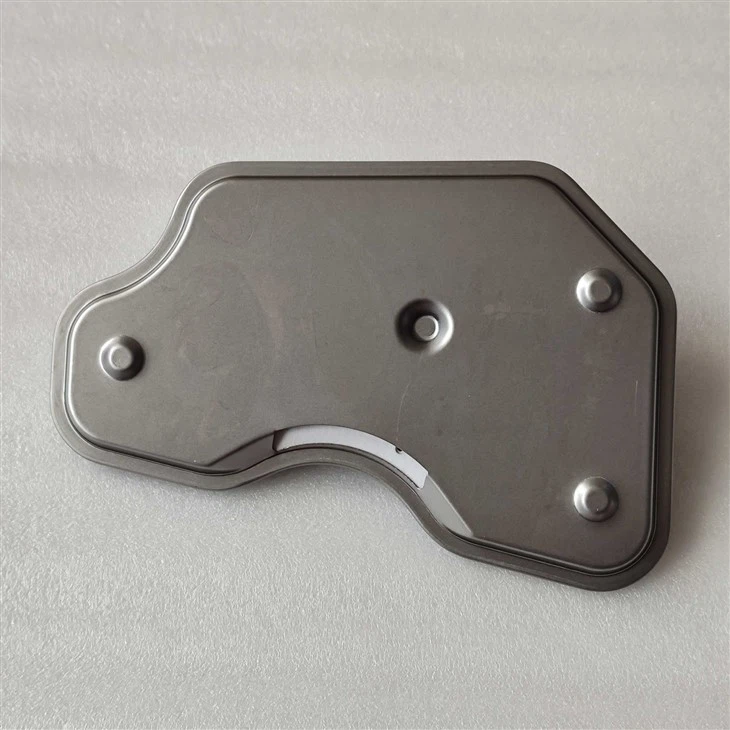
Now, I know what you're thinking - "Okay, this is all cool, but where can I get some good Inner Filters?" Well, we've got some great options. Check out our 7D36SG - 0005 - AM Iinner Filter 7DCI700 7D36SG Transmission For BMW. It's designed to work really well in specific systems and can help you manage the Inner Filter effect effectively.
Another option is our SR8AT - 0002 - AM SR8AT Inner Filter Early Generation With Pillar 8AT032600007 708040 168942. This Inner Filter is great for early - generation systems and can provide a stable environment for your fluorophore experiments.
And if you're looking for an Inner Filter that fits systems without start - stop features, we've got the Inner Filter Fit W/O Start - Stop 481482H000. It's tailored to meet the specific needs of those types of setups.
When it comes to choosing the right Inner Filter for your fluorophore experiments, it's important to consider factors like the wavelength range of your excitation and emission light, the concentration of your sample, and the overall setup of your experiment. Our team is always here to help you make the best choice.
If you're interested in learning more or want to start a procurement discussion, we're just a message away. We can provide you with detailed product information, pricing, and even help you with custom - fitting Inner Filters for your unique requirements. Whether you're a researcher in a lab, a product developer, or just someone who's into cool fluorescence tech, we've got the Inner Filters to support your work.
In conclusion, understanding the connection between Inner Filter and the stability of a fluorophore is crucial for accurate fluorescence measurements. By using the right Inner Filters, you can control the Inner Filter effect and get more reliable results about the stability of your fluorophores. So, don't hesitate to reach out and start exploring our Inner Filter options for your next project.
References
- Lakowicz, J. R. (2006). Principles of Fluorescence Spectroscopy. Springer.
- Valeur, B. (2002). Molecular Fluorescence: Principles and Applications. Wiley - VCH.