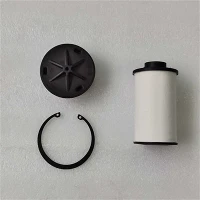

Hey there! As a supplier of the 18601D, I often get asked about the input and output requirements of this amazing device. So, I thought I'd put together this blog post to give you all the deets.


First off, let's talk about what the 18601D is. It's a high - performance piece of equipment that's used in a variety of industries, from automotive to industrial manufacturing. It's known for its reliability and efficiency, which is why it's a popular choice among our customers.
Input Requirements
Power Input
The 18601D typically requires a stable power source. Most models operate on a standard voltage range. For the basic version, it usually runs on a DC power supply of around 12 - 24 volts. This is a pretty common voltage range, which means you can easily find a power adapter or power source that fits the bill. Make sure that the power source can provide enough current to meet the device's demands. If the power supply can't deliver sufficient current, the 18601D might not function properly, or it could even get damaged over time.
Signal Input
In terms of signal input, the 18601D can accept a variety of signals. It has analog and digital input options. For analog signals, it can handle voltage levels in the range of 0 - 10 volts or 4 - 20 milliamperes. This makes it compatible with many different types of sensors and measurement devices. For example, if you're using it in an automotive application, you might connect it to sensors that measure temperature, pressure, or fluid levels.
The digital input, on the other hand, is designed to work with standard logic levels. It can recognize high and low states, which are typically represented by 0 and 5 volts respectively. This allows it to interface with other digital devices, like microcontrollers or programmable logic controllers (PLCs).
Data Input
When it comes to data input, the 18601D supports different communication protocols. One of the most common ones is the Modbus protocol. Modbus is a simple and widely used protocol for serial communication between electronic devices. It allows you to send and receive data in a structured way. You can use Modbus to configure the device, read sensor data, or control its operation.
Another protocol that the 18601D can support is the Ethernet protocol. Ethernet provides a high - speed and reliable way to transfer data over a network. With Ethernet connectivity, you can integrate the 18601D into a larger network system, making it easier to manage and monitor multiple devices at once.
Output Requirements
Power Output
The 18601D has a power output that can be used to drive other devices. The output voltage and current depend on the specific model and configuration. Generally, it can provide a stable DC output in the range of 5 - 12 volts, with a current capacity of up to a few amperes. This is useful for powering small sensors, actuators, or other low - power devices.
Signal Output
Just like the input, the 18601D has both analog and digital output capabilities. The analog output can provide a variable voltage or current signal, which can be used to control other analog devices. For example, you might use the analog output to control the speed of a motor or the position of a valve.
The digital output is used to send on/off signals to other devices. It can drive relays or other digital switches. The output logic levels are similar to the digital input, with high and low states represented by 0 and 5 volts.
Data Output
The data output of the 18601D is also based on the supported communication protocols. Using Modbus or Ethernet, it can send data about its status, sensor readings, or other relevant information. This data can be used for monitoring and control purposes. For instance, you can use a computer or a mobile device to access the data and analyze it in real - time.
Compatibility with Overhaul Kits
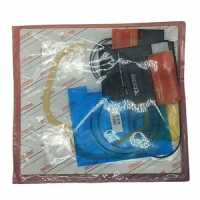
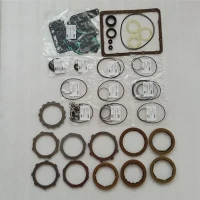
If you're looking to maintain or upgrade your 18601D, we also offer a range of overhaul kits. These kits are designed to keep your device in top - notch condition. For example, the 8G45 21901A Overhaul Kit Fit All Models Car is a great option if you're using the 18601D in an automotive application. It contains all the necessary parts to replace worn - out components and ensure smooth operation.
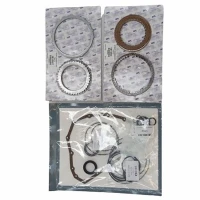
The 722.9 - K189900A - AM Overhaul Kit K189900A 722.9 Transmission is another useful kit. It's specifically designed for transmission - related applications. With this kit, you can easily perform maintenance on the 18601D when it's used in a transmission system.
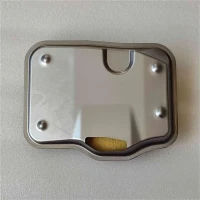
And for those using the 18601D in a 4EAT transmission setup, the 4EAT - 13501A - AM Overhaul Kit 13501A 4EAT Transmission is the way to go. It includes all the parts needed to overhaul the device and keep it running efficiently.
Why Choose Our 18601D?
We take pride in providing high - quality 18601D devices. Our products are rigorously tested to ensure they meet the highest standards of performance and reliability. We also offer excellent customer support. If you have any questions about the input and output requirements, or if you need help with installation or maintenance, our team of experts is always ready to assist you.
Let's Talk Business
If you're interested in purchasing the 18601D or any of our overhaul kits, we'd love to hear from you. Whether you're a small business or a large corporation, we can work with you to meet your specific needs. Contact us to start a conversation about your requirements, and let's see how we can help you get the most out of the 18601D.
References
- Industry standards for electronic device input and output requirements.
- Manufacturer's specifications for the 18601D.
- Technical documentation for the overhaul kits.