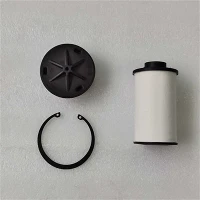

Yo, folks! Today, I wanna dive into a pretty cool topic that's been on my mind a lot lately: Can inner filter be a concern in the study of single - molecule fluorescence? As someone who runs an inner filter supply business, I've seen firsthand how these little filters play a big role in all sorts of scientific studies.
Let's start by getting a basic understanding of what single - molecule fluorescence is. In simple terms, it's a technique that allows scientists to observe and study individual molecules. This is super important because it gives us insights into biological and chemical processes at a level that was once impossible. By tagging molecules with fluorescent dyes, researchers can track their movements, interactions, and behaviors.

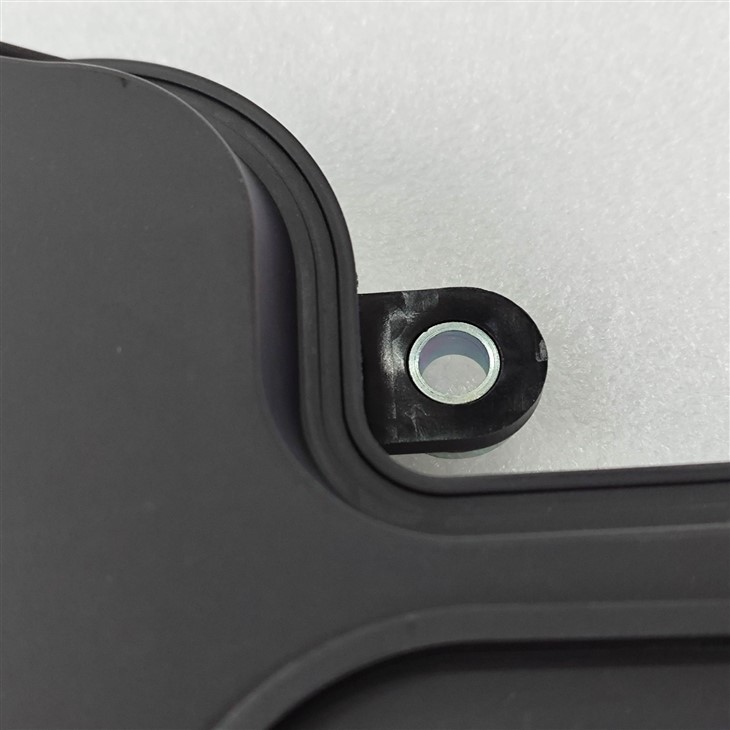
Now, what about inner filters? Well, inner filters are essentially components that can absorb or scatter light. They're used in a variety of applications to control the light that reaches a sample. In the context of single - molecule fluorescence, inner filters can have both positive and negative impacts.
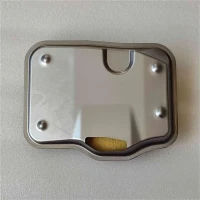
On the positive side, inner filters can be used to reduce background noise. When you're trying to detect the fluorescence of a single molecule, there's often a lot of background light from the surrounding environment or other molecules in the sample. Inner filters can help block out this unwanted light, making it easier to see the faint fluorescence signal from the molecule of interest. For example, the M91A-0001-AM Inner Filter 25420-RXH-003 RE4 CP1 M91A Auto Transmission New Condition is designed to precisely filter out specific wavelengths of light, which can be really useful in single - molecule fluorescence setups.
However, inner filters can also be a concern. One of the main issues is that they can cause a decrease in the fluorescence intensity. When light passes through an inner filter, some of it is absorbed or scattered. This means that less light reaches the sample, and in turn, the fluorescence signal that's emitted from the single molecule is weaker. This can make it more difficult to detect and analyze the molecule.
Another problem is that inner filters can introduce artifacts. Artifacts are false signals or changes in the data that aren't actually related to the molecule being studied. For instance, if an inner filter has an uneven absorption profile, it can cause some parts of the sample to receive less light than others. This can lead to inconsistent fluorescence signals and make it hard to draw accurate conclusions.
Let's take a closer look at how these issues can affect the study of single - molecule fluorescence. When the fluorescence intensity is decreased due to the inner filter, it becomes a challenge to distinguish the signal from the background noise. Scientists rely on strong, clear signals to accurately measure things like the lifetime of the fluorescence, the number of molecules present, and their binding affinities. A weak signal can lead to inaccurate measurements and unreliable data.
The artifacts introduced by inner filters can also be a major headache. Imagine you're trying to study how a single molecule binds to another molecule. If the inner filter is causing artifacts in the data, you might think you're seeing a change in the binding behavior when in reality, it's just an effect of the filter. This can lead to wrong conclusions and wasted time and resources.
But don't get too worried! There are ways to mitigate these concerns. One approach is to carefully select the right inner filter for the specific experiment. Different inner filters have different absorption and scattering properties, so it's important to choose one that minimizes the negative effects while still providing the necessary filtering. For example, the Filter 35330-0W050 is optimized for certain wavelengths and applications, which can help reduce the chances of artifacts and maintain a reasonable fluorescence intensity.
Another solution is to use calibration techniques. By measuring the effect of the inner filter on a known sample, scientists can correct for the decrease in fluorescence intensity and account for any artifacts. This way, they can get more accurate and reliable data.
In addition, advancements in technology are also helping to address these issues. Newer inner filters are being developed with better performance and more precise filtering capabilities. These filters are designed to minimize the absorption and scattering of light while still effectively blocking out the background noise. For example, the V4A51-0004-AM Inner Filter Low 124942 is a state - of - the - art inner filter that offers improved performance in single - molecule fluorescence studies.
So, to answer the question, yes, inner filter can definitely be a concern in the study of single - molecule fluorescence. But with the right approach, it doesn't have to be a deal - breaker. By being aware of the potential problems and taking steps to address them, scientists can still use inner filters effectively in their research.
If you're involved in the study of single - molecule fluorescence or any other field that requires high - quality inner filters, we're here to help. We offer a wide range of inner filters that are designed to meet the specific needs of different experiments. Whether you're looking for a filter to reduce background noise or one that provides precise wavelength filtering, we've got you covered.
If you're interested in learning more about our products or discussing your specific requirements, feel free to reach out. We're always happy to have a chat and help you find the best inner filter solution for your research.
References
- Lakowicz, J. R. (2006). Principles of Fluorescence Spectroscopy. Springer Science & Business Media.
- Weiss, S. (1999). Fluorescence Spectroscopy of Single Biomolecules. Science, 283(5408), 1676 - 1683.
- Roy, R., Hohng, S., & Ha, T. (2008). A Practical Guide to Single - Molecule FRET. Nature Methods, 5(6), 507 - 516.