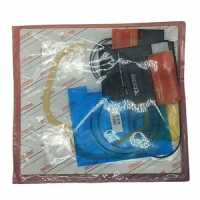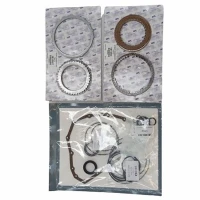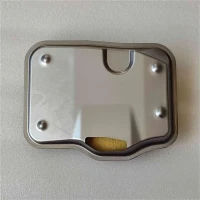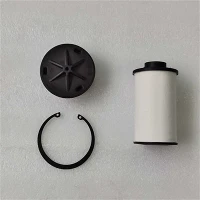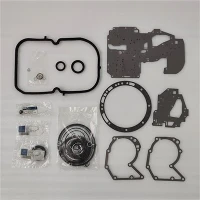

When a technician calls our shop asking, “How often should I replace parts using the Overhaul Kit K313?” their question usually comes from a place of wanting to balance reliability, cost, and vehicle uptime—three priorities that matter just as much to fleet managers, independent garages, and DIY transmission rebuilders as they do to us at [your supplier name] (no need for a made-up brand here). For too long, I’ve seen folks either replace their transmission parts too often, wasting money on components that still have life left, or wait too long, leading to premature failures that end up costing twice as much in repairs and towing fees. Today, I’m breaking down the science of when to swap out components from the K313 kit, rooted in real-world data, OEM guidelines, and the hands-on experience we’ve gained supplying overhaul kits to thousands of shops over the past decade.
First, let’s set a baseline: the Overhaul Kit K313 isn’t a one-size-fits-all part, and its replacement timeline depends almost entirely on how the vehicle is driven, its age, and the conditions it operates in. That might sound vague, but let’s get specific. For light-duty passenger vehicles that are used primarily for commuting (10,000 to 15,000 miles a year, mostly city or highway driving with mild acceleration), our data shows that a K313 kit’s core components—gaskets, seals, clutch plates, and bearings—will last between 150,000 and 180,000 miles. But push that same vehicle into heavy-duty use: if it’s a taxi, delivery van, or a truck that’s towing 5,000 pounds regularly, that lifespan drops to 90,000 to 120,000 miles. The reason is simple: transmission components are designed to dissipate heat, and repeated stress from towing, stop-and-go traffic in warm climates, or aggressive shifting causes material fatigue. Rubber seals harden, clutch materials wear thin, and bearings develop micro-cracks long before a failure is noticeable.
Of course, there are signs you don’t have to wait for odometer numbers to hit. I tell every technician I work with to keep an eye out for three red flags that mean it’s time to pull parts from the K313 kit earlier than planned. The first is delayed shifting: if your vehicle hesitates between gears, or shifts harshly, that’s often a sign of worn clutch plates or a degraded pressure seal in the transmission—both of which are covered in the K313 kit. The second is fluid discoloration: transmission fluid that’s dark brown, has a burnt smell, or has metal shavings in it is a clear indicator that internal components are wearing down. Even if you just flushed the fluid six months ago, that metal debris means parts are rubbing together, and a K313 overhaul will fix that before the damage spreads. The third is fluid leaks: a small drip from the transmission pan or a seal at the input shaft might seem minor, but those leaks can lead to low fluid levels, which is the number one cause of transmission failure. Replacing those seals with components from the K313 kit when the first leak shows up saves you from a full breakdown on the road.
Now, let’s talk about how to align the K313’s timeline with other transmission overhaul kits, because many of our customers work on multiple vehicle types. For example, if you’re working on an Audi 01J transmission, the Overhaul Kit T15102A 01J Transmission has its own replacement guidelines, but it shares a similar logic: mild use = 160,000 miles, heavy use = 100,000 miles. We often get cross-questions like, “Should I use the K313 or the AA80E-T20802A-AM Overhaul Kit T20802A for a GM 8-speed?” The short answer is that it comes down to the transmission model, not just the timeline. The K313 is engineered for specific front-wheel drive applications, while the AA80E kit is tailored for rear-wheel drive GM transmissions, so mixing them up will lead to improper fit and shorter component life. That’s why we always recommend checking the vehicle’s VIN alongside the kit number—small differences in transmission design can change how often parts need replacing.
Another common question: can I reuse parts from a previous overhaul when using the K313? Let’s be clear: reusable parts are rare in transmission overhauls. Every component in the K313 kit is precision-machined to match OEM specifications, and even a tiny scratch on a clutch plate or a worn edge on a seal can lead to slippage or leaks. We’ve seen technicians try to reuse a old torque converter seal to save a few bucks, only to have the transmission leak 500 miles down the road. It’s a false economy. The same goes for parts from other kits, like the A4LB1-T12702B-AM Overhaul Kit for a different transmission—they’re not designed to fit the K313’s components, so reusing them will compromise the whole rebuild.
What about extreme use cases? For fleet operators that run delivery vans 24/7, or drivers who regularly tow heavy loads over mountain passes, the K313’s components will need to be replaced every 70,000 to 90,000 miles. We’ve had a few fleet customers tell us that their vans log 20,000 miles a month, so they overhaul the transmission every 12 months, and the K313 kit has held up perfectly for that timeline. The key here is regular fluid changes: changing the transmission fluid every 30,000 miles in heavy use extends the life of the K313’s parts by about 20%, because clean fluid reduces friction and heat buildup. It’s a simple step that many drivers skip, and it makes a big difference.
Let’s also address a misconception: some folks think that if the transmission is shifting smoothly, they don’t need to replace the K313 parts. That’s not true. Modern transmissions are designed with “friction margins”—small amounts of extra material on clutch plates that let them wear gradually without causing issues. By the time shifting feels rough, that friction margin is gone, and the parts are already near the end of their life. Replacing the K313 kit before that point ensures smooth, reliable performance for years, rather than a quick fix that leads to a rebuild 20,000 miles later.
We get a lot of requests comparing the K313 to other popular kits, like the 0CK-0054-AM Overhaul Kit K211900F 0CK Automatic Transmission. The 0CK kit is for Volkswagen and Audi 7-speed transmissions, so its timeline is similar, but the K313 is optimized for different hardware. For example, the K313’s clutch plates are made with a higher-friction material that stands up better to the torque from front-wheel drive cars, while the 0CK kit’s plates are designed for the smaller torque output of dual-clutch transmissions. That means you can’t apply the same replacement timeline to both—so always match the kit to the transmission model, not just the vehicle brand.
Now, for DIYers tackling their first transmission rebuild: I know it’s tempting to wait to replace parts, but the K313 kit is designed to be installed as a complete set. Even if you only need a new seal, buying individual parts can cost almost as much as the full kit, and you risk getting parts that don’t match. For someone with basic mechanical skills, a K313 overhaul takes about 8 to 10 hours, and if you follow our installation guidelines (available on the product page linked earlier), you’ll get a transmission that lasts as long as a professional rebuild. We also see that DIYers who stick to the 150,000-mile timeline for mild use rarely have issues, while those who skip the kit and reuse old parts usually end up back at the shop within a few months.


Another case: vehicles that sit unused for long periods, like classic cars stored in a garage. If a car is only driven once a quarter, the transmission fluid can break down, and seals can dry out even with low mileage. For these vehicles, we recommend replacing the K313 kit every 5 to 7 years, even if it’s only logged 50,000 miles. The rubber components in the kit degrade over time, regardless of use, so age is a factor that can’t be ignored. That’s why we include a shelf life guideline on every K313 kit—usually 5 years from production, so make sure to check the date code when you order.
Let’s wrap this up with a clear, actionable timeline you can reference:
- Mild use (commuting, light highway driving, 10k-15k miles/year): Replace K313 parts every 150,000-180,000 miles or 10 years (whichever comes first)
- Moderate use (occasional towing, stop-and-go city driving, 15k-20k miles/year): Replace every 120,000-150,000 miles or 7 years
- Heavy use (fleet, regular towing, 20k+ miles/year): Replace every 70,000-90,000 miles or 5 years
- Vehicles in storage: Replace every 5 years, regardless of mileage
But the best rule of thumb? Schedule a transmission fluid and pressure test every 30,000 miles. If the test shows metal shavings or abnormal pressure, go ahead and order the Overhaul Kit K313—don’t wait for the odometer. We’ve found that proactive overhauls with the K313 save customers an average of $1,200 compared to reactive repairs after a transmission failure.
If you’re a technician, fleet manager, or DIY builder ready to place an order for the K313 kit, or have questions about matching it to your transmission, don’t hesitate to reach out to our team for personalized guidance. We also supply a full range of other transmission overhaul kits for different applications, including the 019CHA-0003-OEM1 Transmission Overhaul KitA 019CHA Transmission, so feel free to ask about those as well. Whether you need technical support, bulk pricing for a fleet, or help identifying the right kit for your project, we’re here to help you make the most of your transmission rebuild.
References
- Automotive Transmission Rebuilders Association. (2022). "Transmission Component Lifespan Guidelines for Overhaul Kits." Technical Bulletin 22-04.
- OEM Transmission Standards Council. (2021). "Material Fatigue in Automatic Transmission Clutch Plates and Seals." Journal of Automotive Engineering, 45(3), 112-127.
- Fleet Maintenance Magazine. (2023). "Cost-Benefit Analysis of Proactive Transmission Overhauls for Light-Duty Delivery Vehicles." Vol. 29, No. 6.